


Flooded Basement Cleanup in Greeley, Colorado
We begin by finding the water source and assessing the basement, connected rooms, contents, and visible safety concerns. The crew maps moisture in floors, walls, cabinets, baseboards, and framing. We then remove standing water with extraction equipment and separate salvageable materials from items that need removal.
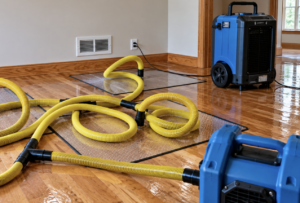
Moisture meters help us check areas below flooring and inside walls. Thermal imaging supports the inspection of hidden damp spots. Air movers and dehumidifiers support structural drying, while regular monitoring shows whether moisture levels are moving in the right direction.
After extraction and drying, we clean affected surfaces and address salvageable contents. We explain the remaining repair work for drywall, insulation, flooring, subflooring, cabinets, or other materials. If the water came from a sewer backup, the crew follows a separate cleanup plan for contaminated materials and surfaces.
Need Restoration Help in Greeley? Call (970) 548-4760
Commercial Flooded Basement Cleanup in Greeley
Commercial basement losses can affect offices, retail spaces, multifamily buildings, warehouses, and other occupied facilities. Our team plans equipment placement, access routes, and work zones around tenants, employees, inventory, shared systems, and areas that remain in use. This helps limit disruption while wet materials are removed and the building dries.
Property owners and managers receive organized documentation of photos, moisture readings, affected areas, and completed work. That information supports repair planning and helps everyone understand what has been done before reconstruction begins.
Seasonal Basement Flooding in Greeley
Winter freezes can burst exposed pipes and supply lines. Late-winter thawing, spring snowmelt, and rain can send water toward foundations, garages, crawl spaces, and basement doors. Summer thunderstorms can cause roof leaks, sump problems, sewer backups, and sudden runoff. In fall, clogged gutters and weak plumbing can create trouble before freezing weather returns.
Our assessment connects the cause to the cleanup plan. We inspect the plumbing, sump system, basement layout, roof drainage, and path the water took. That information guides water removal, structural drying, cleaning, and repair planning.
For damage that also involves smoke or fire residue, our fire damage cleanup team can address affected areas and contents. If damp materials have created a mold concern, our mold removal service can help with that separate problem.
Standing water in a basement can spread into flooring, drywall, insulation, wiring, furniture, and stored belongings. Our team removes the water, checks how far it traveled, and starts controlled drying for homes and businesses in Greeley. Call for help as soon as the area is safe to enter.
Commercial properties need a different work plan. Offices, retail spaces, and industrial buildings can have tenant areas, shared systems, equipment, inventory, and busy access points. Our crew places equipment and work zones around unaffected areas, occupant safety, and the owner's operating needs. We also keep clear records of photos, moisture readings, affected rooms, and completed work.
Water Damage Cleanup Pricing
The final cost depends on the water source, affected materials, access, contamination, and amount of drying required. We assess the basement and explain the work before restoration moves forward.
- Small water loss: $1,000–$3,000
- Moderate water loss: $3,500–$7,500
- Large water loss: $10,500–$15,000+
These prices are general reference points and are not a quote or estimate for a specific property. Actual restoration costs depend on the source and category of water, affected square footage, materials involved, length of exposure, equipment needs, demolition, cleaning, drying time, and repairs. A complete price estimate requires an onsite inspection because the final scope depends on the actual conditions at the property.
Need Restoration Help in Greeley? Call (970) 548-4760
Safety comes first around standing water. Keep children and pets away, and do not enter if water has reached outlets, appliances, or electrical equipment. Water from a sewer backup also needs careful handling. Our IICRC-certified technicians identify the source, document moisture levels, explain the work, and keep the drying plan organized from the first inspection through repair planning.
Frequently Asked Questions
What should I do first after my basement floods?
Keep people and pets away from the water and avoid electrical hazards. If water has reached outlets, appliances, or electrical equipment, do not enter the area until it is safe. Contact our team so we can assess the source, remove standing water, and plan drying.
Can you remove water from a finished basement?
Yes, we remove standing water from finished basements and inspect materials such as carpet, pad, flooring, drywall, cabinets, insulation, and framing. Moisture checks help us decide what can be dried and what needs removal.
How do you dry a flooded basement?
We use extraction equipment first, then air movers and dehumidifiers to support controlled structural drying. Our technicians monitor moisture in visible and hidden areas instead of relying only on how the surfaces look.
Do you help with commercial flooded basements?
Yes, we help commercial property owners and managers plan cleanup around occupants, inventory, shared systems, access routes, and areas that remain in use. We also document affected spaces, moisture readings, and completed work.
What if the basement water came from a sewer backup?
A sewer backup requires a separate cleanup plan for contaminated materials and affected surfaces. Keep people and pets away from the area and let our technicians assess the water source and affected building materials.
How do I know what repairs are needed after water removal?
Our team documents the affected areas during assessment, extraction, drying, and cleaning. We then explain remaining repair needs for materials such as drywall, insulation, flooring, subflooring, cabinets, and baseboards.